Twist and expansion profiles of magnetic loop responsible for coronal heating and solar wind generation
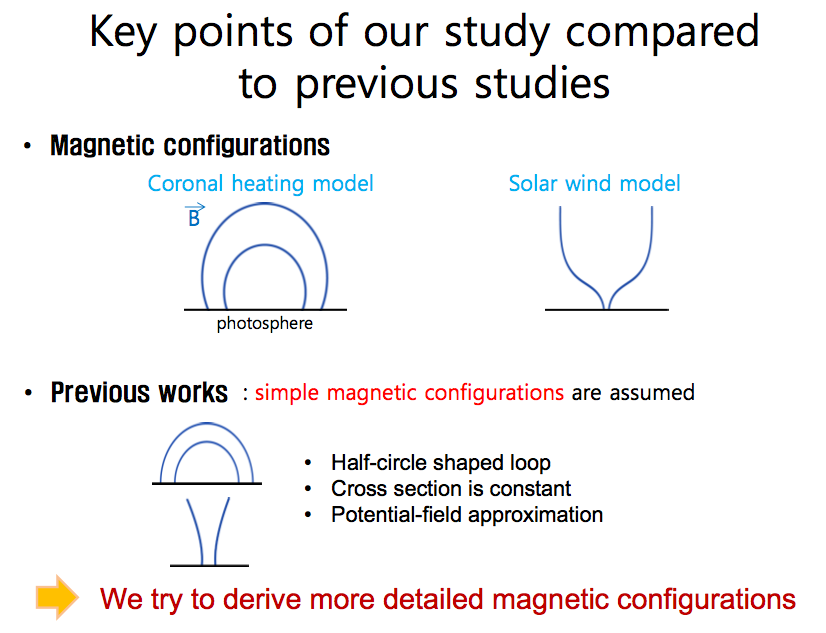
Generation of a plasma outflow from the Sun known as the solar wind is coupled with heating of a solar atmospheric plasma, and both processes are expected to operate in a solar magnetized atmosphere
composed of magnetic loops. To investigate what magnetic field configuration is responsible for these processes,
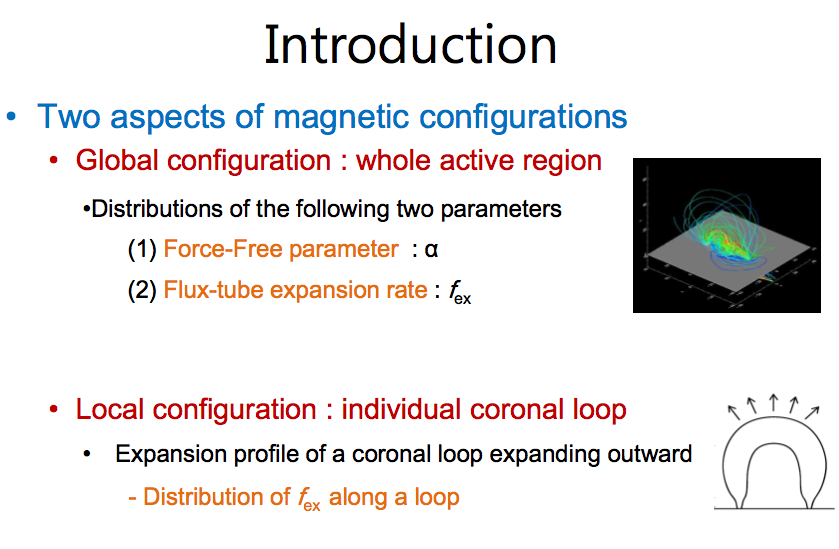
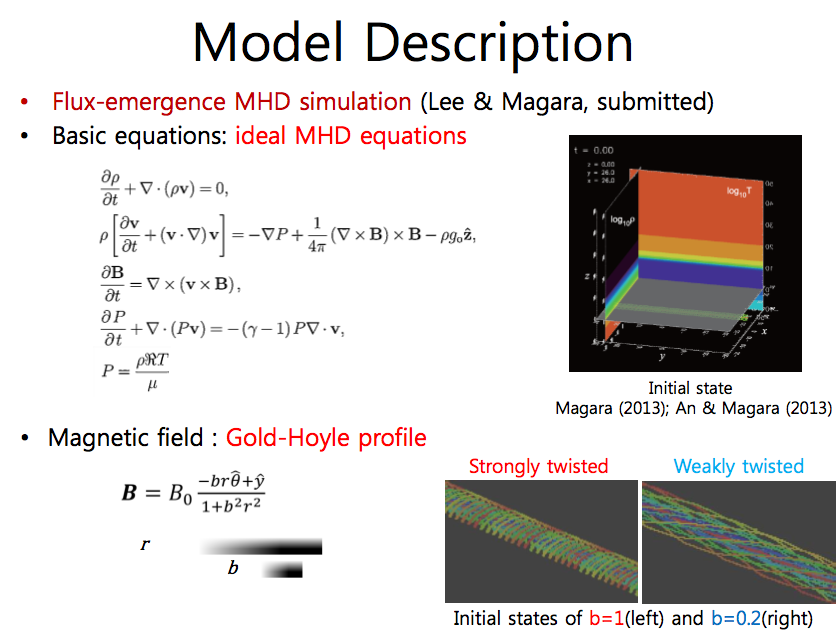
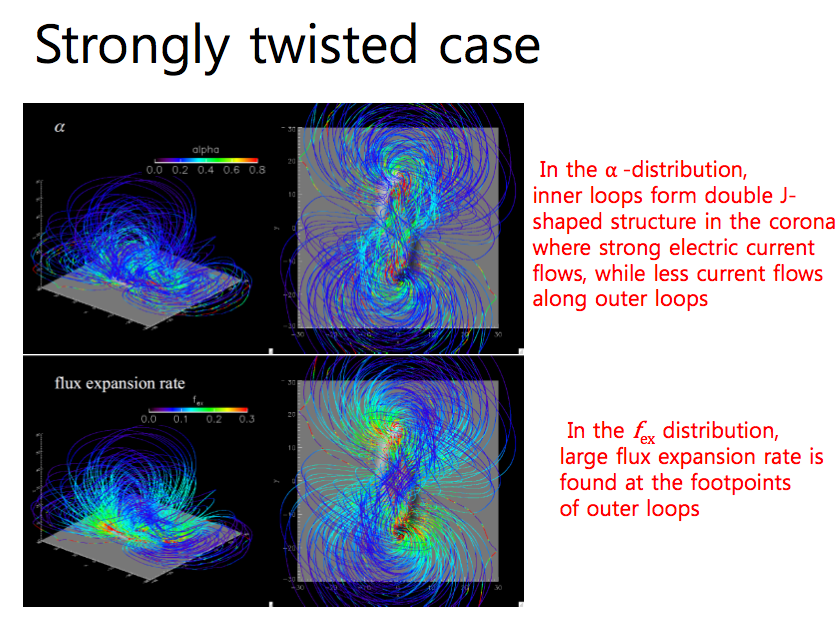
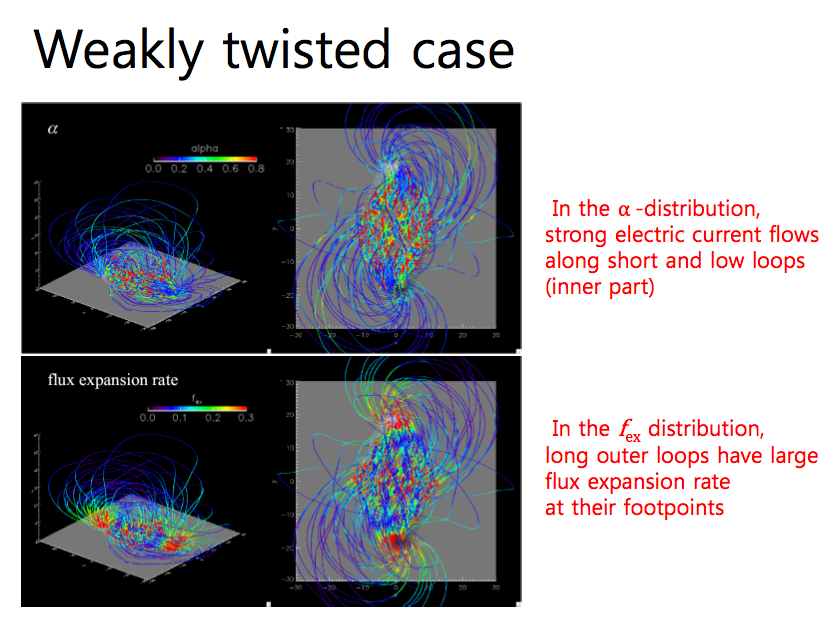
we performed a pair of three-dimensional magnetohydrodynamic simulations of flux emergence and produced an emerging flux region based on a strongly/weakly twisted flux tube (ST/WT case). We focused on two
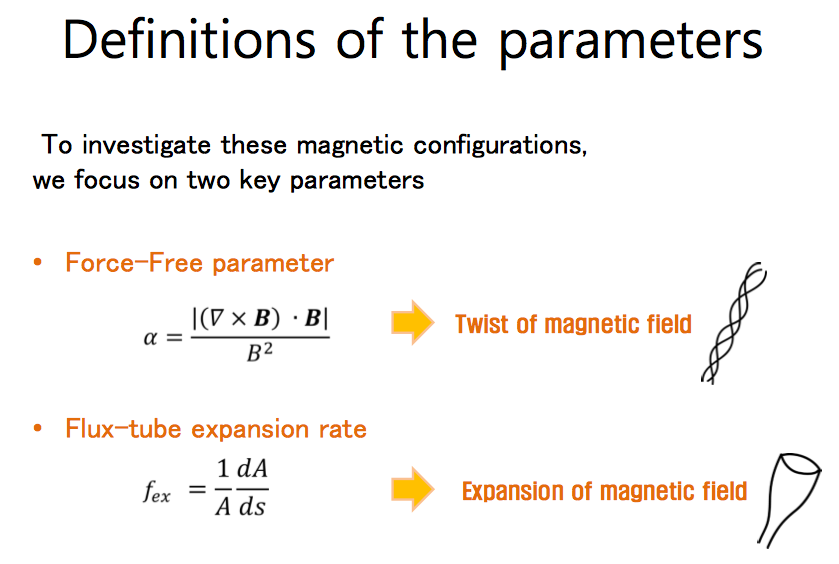
factors characterizing the magnetic configuration, force-free α and flux
expansion rate fex, the former of which represents how much a magnetic loop is twisted around its axis,
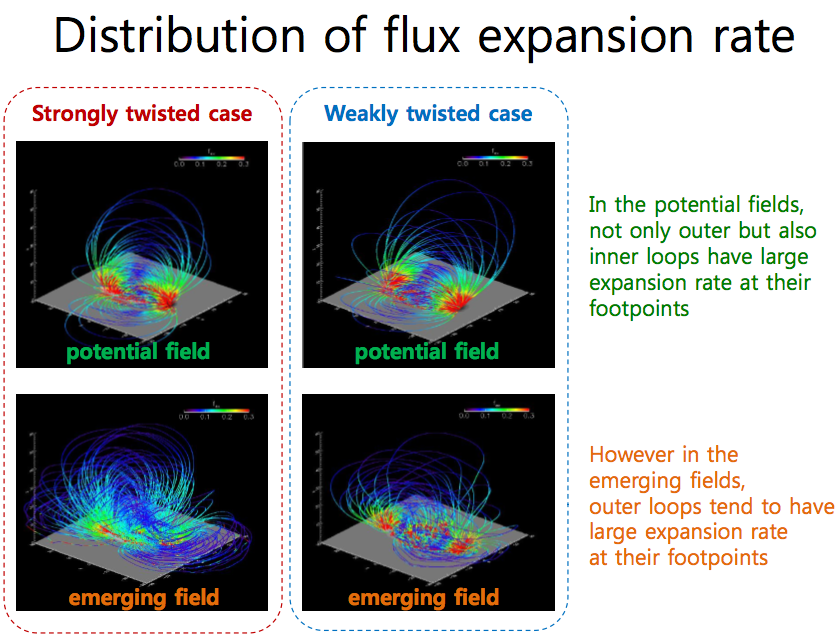
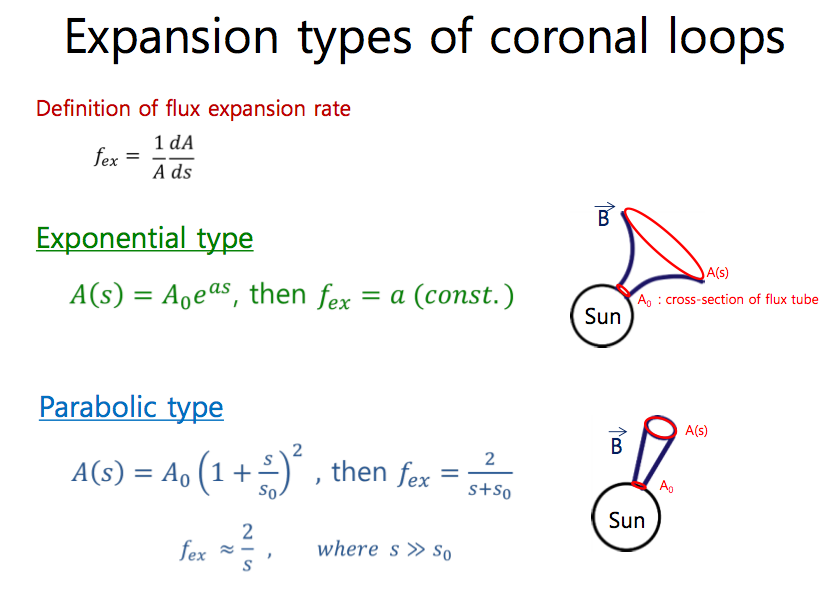
while the latter how sharply the loop expands along its axis.
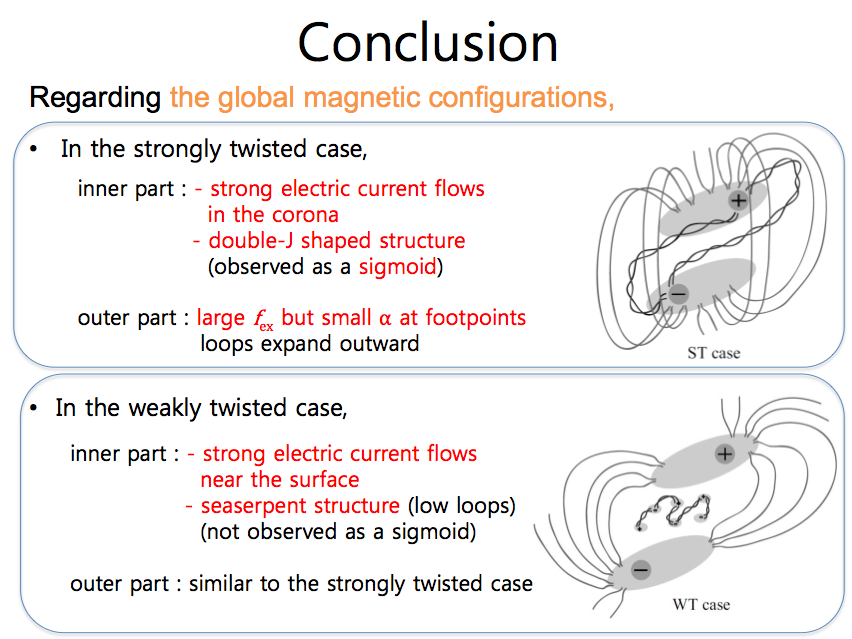
In ST case, outer loops take large values of fex but small values of |α| at their photospheric footpoints, while inner loops formed double J-shaped structure, taking large values of fex and |α| at their photospheric footpoints. The double J-shaped structure indicates that strong field-aligned current flows along these inner loops.
In WT case, outer loops take large values of fex but small values of |α| at their photospheric footpoints (same as ST case), while inner loops formed low and short loop structure (not double J-shaped structure), taking small values of fex (different from ST case) but large values of |α| (same as ST case) at their photospheric footpoints.
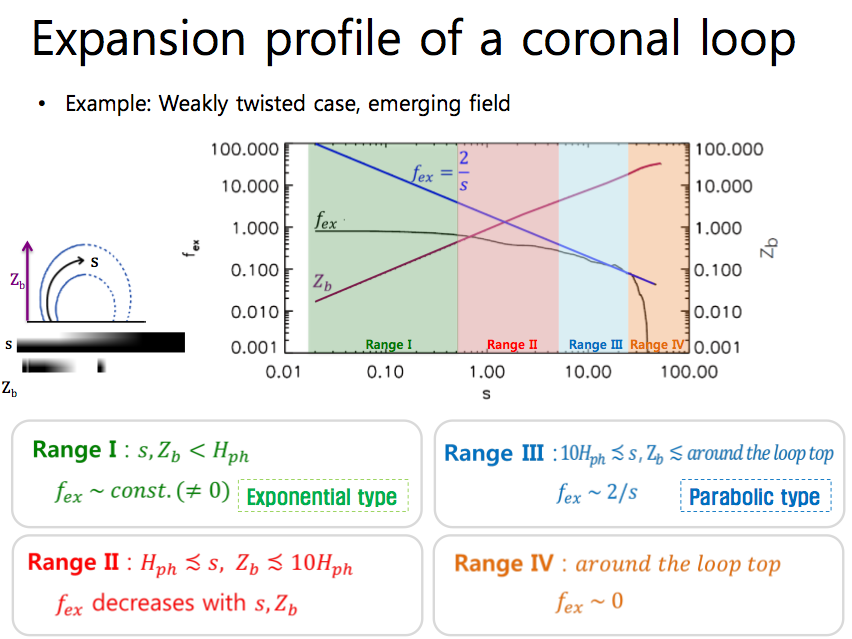
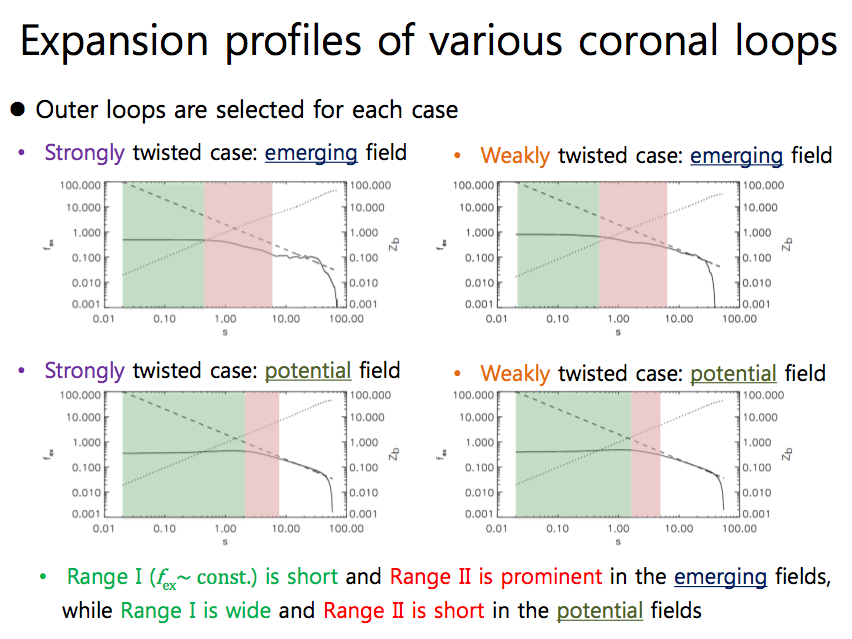
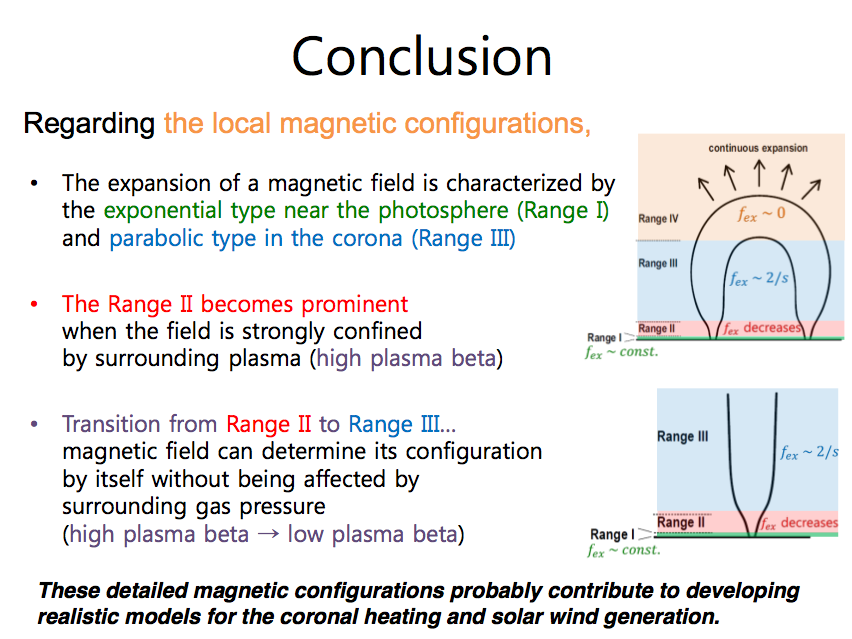
We also examined expansion
profiles of selected loops, and found that they showed an exponential profile near the photosphere while a quadratic
profile well above the photosphere.
Reference
Lee, H. H. & Magara, T. 2014, PASJ, 66, 39